How does Mahjong influence social interaction among Vietnamese?
I remember that when I was about twelve years old in Vinh Long, Vietnam, my parents often played Mahjong—a game they also called “shuffling the tiles”—with my father's friends at home. At first, I wasn't particularly interested, but after a few months I began to enjoy it and wanted to learn more about how to play. I also played other games, such as “Xập Xám” (Vietnamese Poker), “Chắn,” “Tam Cúc,” and Chinese chess, but I found Mahjong the most fascinating. Although I already knew how to play Mahjong, I later starting paying closer attention to how Vietnamese people interact socially while playing it.
For those unfamiliar, Mahjong originated in the coastal regions of eastern China around the mid-19th century, during the late Qing Dynasty. From then onward, the game spread throughout China and across the globe, reaching the United States, France, the United Kingdom, and Southeast Asian countries. Between 1920 and 1930, as the Chinese community in Cho Lon, Vietnam, flourished, Mahjong gained popularity and became a common pastime among the elite, merchants, and wealthy Chinese residents. Over time, the game spread to the broader Vietnamese population.
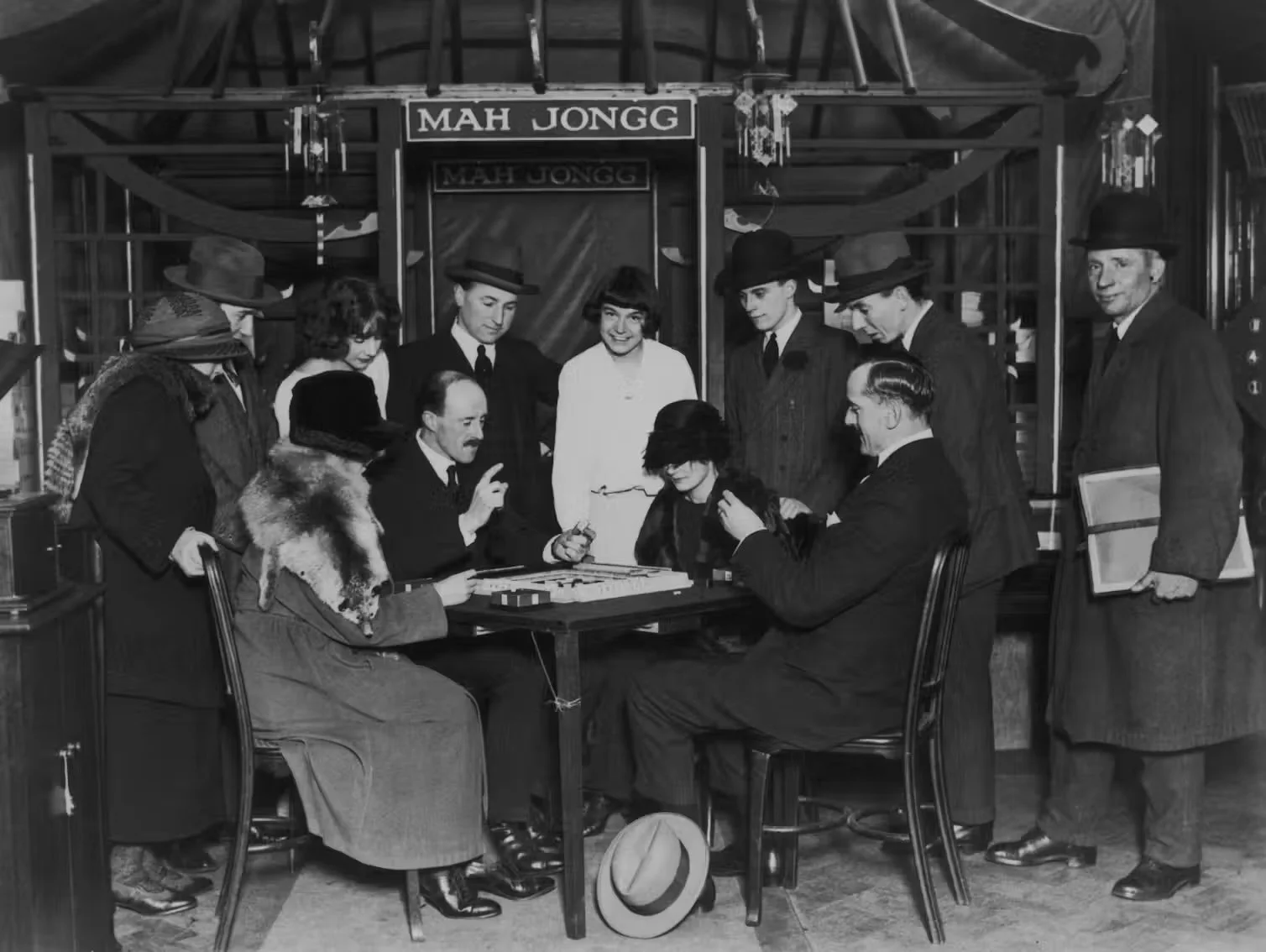
A mahjong class in progress at a Selfridge’s department store in London, circa 1925. Photo by FPG/Hulton Archive/Getty Images
The Chinese version of Mahjong typically consists of 140 tiles, usually made of plastic. However, the Vietnamese version includes additional “flower” tiles and “frame” tiles as jokers for the standard suits—such as the Dots (Văn), Bamboo (Sách), Characters (Vạn), and Winds/Dragons (Tài Phao). This brings the total number of tiles to 160 and adds variety to gameplay. With more “flower” tiles and bonus tiles in the mix, there are greater chances of winning big, and it is easier to manage the game when dealt a poor hand.
Mahjong requires four players. A standard mahjong table measures about 3 to 3.5 feet square, making conversation easy for the four players who sit close together. Beyond the game itself, players often discuss topics unrelated to Mahjong—such as business, politics, healthcare, or social issues—depending on their areas of expertise. I recall my father playing with military officers; they discussed branch-specific military matters. When a doctor was present, the conversation turned to medicine or disease prevention. Once, when my younger sibling had been running a fever for days, a doctor who was playing that day examined them and, at my mother's request, prescribed medication. Often, the players’ wives would accompany them for a visit; while the men played Mahjong, my mother would socialize with the women. This created a pleasant, relaxed atmosphere for my parents and their guests.
Mahjong is enjoyed not only by men but also by many women—my mother included. I have several nieces in Houston, Texas, who are young and love playing the game. This shows that interest in Mahjong spans both older and younger generations. We often play whenever we gather for holidays like the Fourth of July, Thanksgiving, Christmas, and New Year’s. Since we live far apart and rarely see each other, playing Mahjong gives us a chance to catch up on our lives, especially with the younger generation.
I also occasionally visit friends in Dallas, Texas, to play Mahjong. Since we are all retired, our conversations during the game often center on Medicare and money-saving tips. We also discuss politics and the economy, as we frequently keep up with these topics. I also meet new friends and often play Mahjong with them; this fosters a shared interest in getting together and conversing more often.
Mahjong is currently popular across all walks of life, among both men and women. I recently read in The Wall Street Journal that Camp Harlam in Kunkletown, Pennsylvania, has begun teaching children to play. Surprisingly, both the children and the instructors have become truly passionate about the game, often playing all day. One American woman described playing Mahjong with her mother and daughter, calling it a way to bond across three generations. This is no different from what happens in Vietnamese families; I used to play Mahjong with my parents and uncle, and nowadays my wife, child, brother, and I often play together.
As I have mentioned, Mahjong is not merely a form of entertainment but also a means of social connection. It gives families the chance to make new friends, brings relatives closer together, and offers opportunities to learn interesting things. Furthermore, the game fosters greater empathy and understanding among participants.